 Easten Mediatech
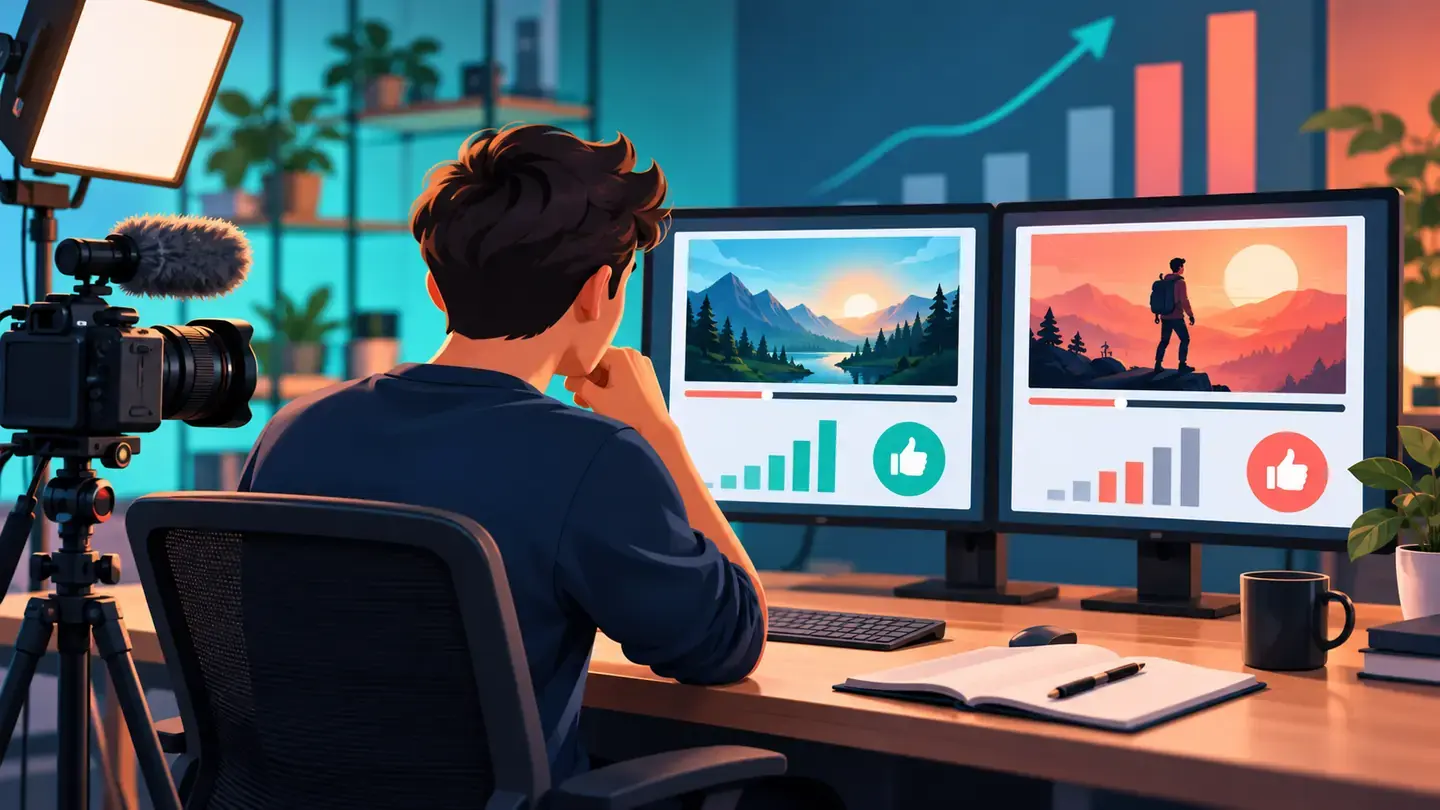
Improve the promise before increasing output
When a video underperforms, a creator's first impulse may be to make another one. Sometimes the more useful question is whether the existing video's title and thumbnail make an accurate, attractive promise. A package is the viewer's first clue about what is inside. It should make the subject clear without suggesting a result the video cannot deliver.
A high click count alone is not the whole story. If the opening and the package point in different directions, viewers may leave quickly. An honest title and thumbnail can attract the people most likely to value the video rather than the widest possible passing audience.
A simple experiment workflow
YouTube's Help documentation says eligible creators can A/B test up to three titles and thumbnails in YouTube Studio on desktop. Choose one existing long-form video with enough audience activity to make a comparison useful. Write two or three genuinely different, accurate ways to frame the same subject. Change one element at a time when you want to understand whether the title or the thumbnail made the difference.
The feature requires advanced features to be enabled. YouTube says Shorts, scheduled livestreams and Premieres are not eligible for the test in the described form; other content restrictions also apply. Check the current eligibility details in YouTube Studio before planning a test. Once launched, let the experiment run. YouTube says completion can take a few days or up to two weeks, depending on impressions and other factors.
Turn the result into a content decision
According to YouTube, the winning version is selected on watch-time share rather than click-through rate alone. The test may show a winner, versions that performed similarly, or an inconclusive result. None of those outcomes proves that one style will work for every future video.
Record the original package, the tested versions and the outcome. Then ask whether the winning promise matched the content, whether the first minute delivered on it, and what viewers asked in the comments. Use the answer to improve the next script as well as the next thumbnail. A small repeatable learning cycle is more useful than changing a design after every low-view day.
Know the limits
A/B testing is a tool for learning about a particular video and audience, not a guaranteed growth switch. If the result is inconclusive, keep the clearest accurate version and test a more meaningful difference next time. If the video itself does not satisfy the promise, packaging alone will not fix the underlying problem. Creators should pair experiments with better research, sharper editing, accessible captions and a consistent reason for viewers to return.