 Easten Mediatech
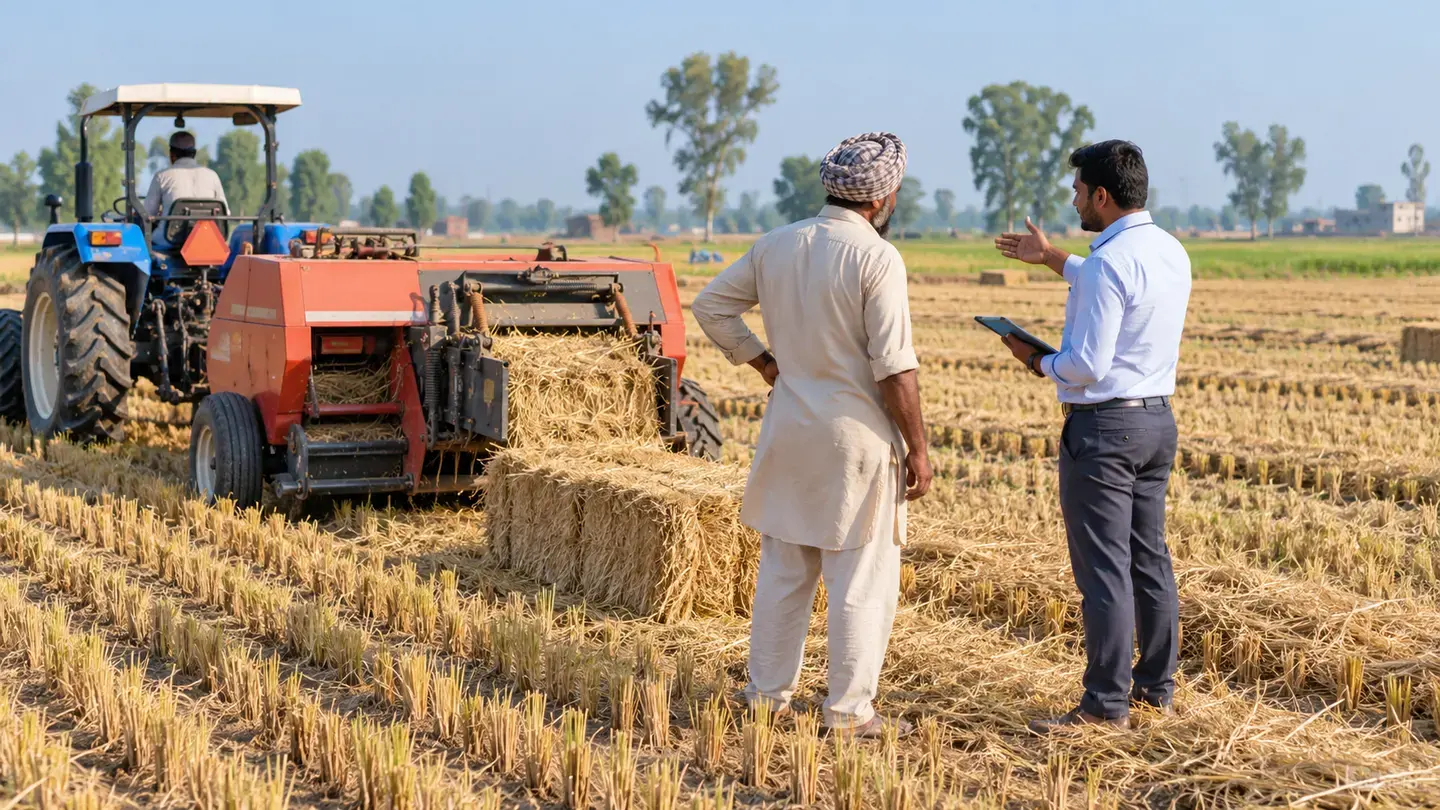
What happened in the two districts
On 24 October, CAQM said its chairperson reviewed paddy-stubble measures with officials in Amritsar and Tarn Taran.
The review covered in-field use, collection for other uses, machinery access and reported fire incidents.
An official review is not proof that every farmer already has a workable alternative to burning.
The practical test is whether equipment, operators and collection routes reach each village when harvest work peaks.
Why access matters more than announcements
Paddy straw must be managed in a short interval before the next crop is planted.
A machine listed on paper is useful only when a farmer can book it, transport it and afford the service on time.
For straw collected off the farm, buyers and transport arrangements need to be real and predictable.
For straw kept in the field, the selected method must fit local soil, equipment and sowing schedules.
The wider Punjab review
A day earlier, CAQM reported visits to facilities and fields in Ropar, Hoshiarpur and Amritsar.
The team saw thermal power, compressed biogas and biomass facilities as well as farm operations.
These visits show the range of possible uses for straw, not guaranteed demand for every bale.
District-level plans still need to connect individual farms with working machines and actual end users.
Questions residents and farmers can ask
Which local office publishes the machine schedule, booking contact and service price?
Where is residue collected, and who pays for baling and transport?
How quickly can a breakdown or missed booking be resolved during the harvest window?
Will district updates report both fire incidents and the number of farmers who obtained usable alternatives?
What to watch next
The next useful update is evidence of timely service in villages, not only a meeting or a target.
Track local machinery availability, field-level utilisation and transparent district reports.
Good public communication should tell farmers exactly whom to contact and what help is available.
For the wider public, the issue links farm economics, operations and air quality; none can be ignored.